Exploring the Best Skin Cancer Treatment Options for Every Stage
Skin cancer is the most common form of cancer worldwide. It occurs when skin cells grow abnormally, often due to excessive exposure to ultraviolet (UV) rays from the sun or tanning beds. Thankfully, with advancements in medicine and early detection, many treatment options are available to help patients recover and live healthy lives.
This blog will guide you through the Best Skin Cancer Treatment options based on cancer type, severity, and stage—so you or your loved ones can make informed decisions.
Understanding Skin Cancer Types
Before we dive into the Best Skin Cancer Treatment, it’s essential to understand the three main types of skin cancer:
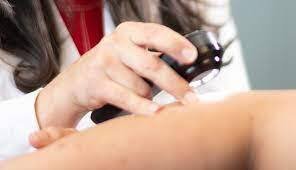
1. Basal Cell Carcinoma (BCC)
- The most common and least dangerous form
- Usually appears as a pearly bump or flat lesion
2. Squamous Cell Carcinoma (SCC)
- More aggressive than BCC
- Appears as a red, scaly patch or sore that doesn’t heal
3. Melanoma
- The most dangerous type
- Can spread quickly to other organs
- Often begins as a mole that changes shape or color
Each type of skin cancer requires a different approach, and the Best Skin Cancer Treatment depends on how early it’s detected and how far it has spread.
The Importance of Early Detection
When skin cancer is caught early, it’s often curable. Early detection allows for less invasive treatments, faster recovery, and better cosmetic outcomes. Regular skin checks, both self-exams and dermatologist visits, are essential in choosing the Best Skin Cancer Treatment for timely intervention.
Best Skin Cancer Treatment Options by Stage
Let’s explore the most effective treatments for each stage and type of skin cancer:
1. Surgical Removal – The Gold Standard
Surgery remains the Best Skin Cancer Treatment for most early-stage cancers.
Types of Surgical Options:
- Excisional Surgery: The cancerous lesion and some surrounding tissue are removed with a scalpel.
- Mohs Surgery: A specialized technique used mainly for facial cancers. The surgeon removes layers of tissue one at a time and examines them under a microscope to ensure no cancer cells remain.
Why it’s best:
- High success rates
- Minimally invasive for small lesions
- Preserves healthy tissue in cosmetic areas
2. Cryotherapy (Freezing)
For small and superficial BCCs or pre-cancerous lesions (actinic keratoses), cryotherapy is often the Best Skin Cancer Treatment.
Procedure:
- Liquid nitrogen is applied to freeze and destroy abnormal cells.
Benefits:
- Quick and cost-effective
- No surgery or stitches required
- Minimal recovery time
3. Radiation Therapy
Radiation is used when surgery isn’t an option due to location, size, or patient health. It’s also a good choice for elderly patients or those who can’t tolerate anesthesia.
Why it’s among the Best Skin Cancer Treatments:
- Non-invasive
- Useful for hard-to-reach areas
- Often combined with surgery for more advanced cases
4. Topical Medications
For non-melanoma skin cancers that are superficial, certain prescription creams can offer the Best Skin Cancer Treatment without surgery.
Common Options:
- Imiquimod (Aldara): Boosts immune response to attack cancer cells.
- 5-Fluorouracil (5-FU): A chemotherapy cream that kills abnormal cells.
Advantages:
- Non-invasive
- Can be applied at home
- Minimal scarring
5. Photodynamic Therapy (PDT)
This is an advanced method used for treating superficial BCCs and actinic keratoses.
How it works:
- A light-sensitive drug is applied to the skin.
- A special light activates the drug, destroying cancer cells.
Why it’s considered one of the Best Skin Cancer Treatment options:
- Targets only abnormal cells
- Minimal damage to healthy tissue
- Excellent cosmetic results
6. Immunotherapy
Immunotherapy helps your immune system recognize and destroy cancer cells. It is particularly promising for advanced melanomas.
Example:
- Checkpoint inhibitors like pembrolizumab (Keytruda) or nivolumab (Opdivo)
Why it’s a top contender for Best Skin Cancer Treatment:
- Effective even in advanced stages
- Can shrink tumors significantly
- Less toxic than chemotherapy
7. Targeted Therapy
This is used for melanomas with specific genetic mutations (e.g., BRAF mutations).
How it works:
- Medications like vemurafenib or dabrafenib block cancer cell growth pathways.
Best for:
- Patients with advanced melanoma
- Individuals with confirmed gene mutations
In these cases, targeted therapy is not just effective—it may be the Best Skin Cancer Treatment available.
8. Chemotherapy
Although less commonly used now for skin cancer, chemotherapy may still be recommended in some cases of metastatic or advanced melanoma when other treatments don’t work.
Forms:
- Oral
- Topical
- Intravenous
While not always the first-line option, it still has a place in the list of Best Skin Cancer Treatment approaches for specific scenarios.
Lifestyle and Prevention After Treatment
No matter which Best Skin Cancer Treatment is chosen, lifestyle changes are critical to prevent recurrence:
- Use broad-spectrum sunscreen daily
- Avoid tanning beds
- Wear protective clothing and hats outdoors
- Perform monthly skin self-exams
- Visit a dermatologist at least once a year
Post-treatment care is just as important as the treatment itself. Staying vigilant can help you avoid recurrence and ensure a long, cancer-free life.
Choosing the Right Treatment
Deciding on the Best Skin Cancer Treatment depends on several factors:
- Type and subtype of skin cancer
- Tumor size and depth
- Location of the cancer
- Patient age and overall health
- Cosmetic outcomes and personal preferences
Always consult a dermatologist or oncologist for a personalized treatment plan. A biopsy and imaging tests may also be needed to determine the best course of action.
Final Thoughts
The good news is that most skin cancers, when detected early, are highly treatable. With many advanced therapies available in 2025, finding the Best Skin Cancer Treatment tailored to your unique case is easier than ever.
Whether it’s a small lesion requiring cryotherapy or an advanced melanoma needing immunotherapy, timely action and medical guidance are key to recovery.
If you or someone you know is dealing with a skin cancer diagnosis, stay hopeful. There’s a world of treatment options—and support—available.